Data-Driven Groundwater Management Improves Water Supply Security in a Changing Climate
Groundwater availability and sustainable management are fundamental to regional water security and public safety. Clean and sufficient water is essential for both human well-being and economic activity. As a result of climate change, groundwater recharge is becoming increasingly susceptible to large fluctuations. Anticipating these changes requires methods for groundwater management that are based on measured monitoring data.
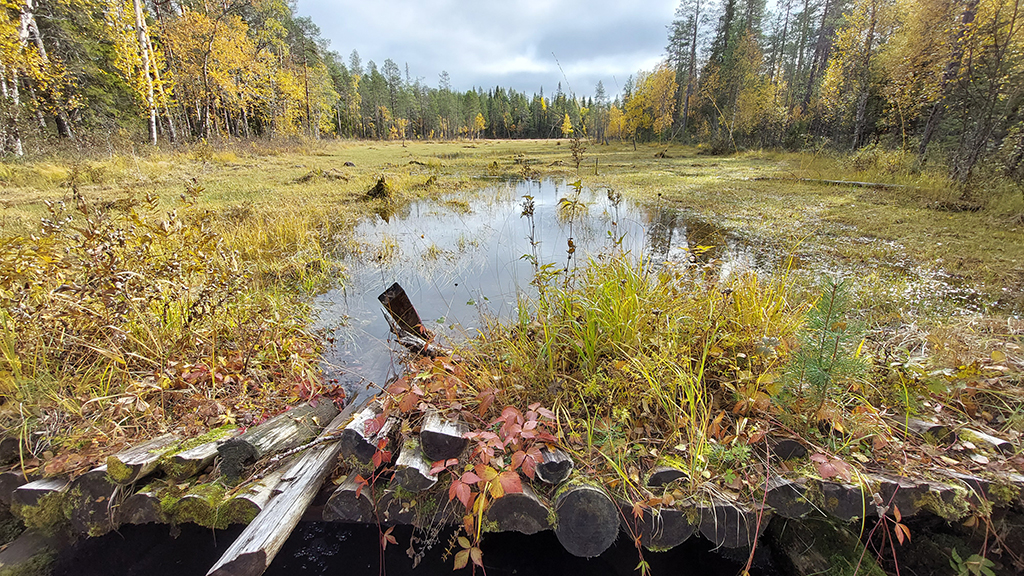
A new research project is developing predictive models for estimating groundwater recharge based on regional monitoring data, with a particular focus on Northern Finland. The results will also be applicable in other regions.
Groundwater resource management can be improved by utilising geospatial groundwater data, such as monitoring records of groundwater levels, flow dynamics, and infiltration rates. By combining these datasets with meteorological observations, it is possible to assess changes in groundwater resources under different future climate scenarios. The predictive models will produce more accurate local information on groundwater recharge as well as safe retention times in different geological formations.
The joint research project by the Geological Survey of Finland GTK, the University of Oulu’s Centre for Measurement and Information Systems (Mity), and LUT University develops data-driven methods for groundwater resource management. The studies focus on both private and public water supply systems in Lapland, Kainuu, and Northern Ostrobothnia.
Research provides actual measurement data on groundwater flow
In Finland, groundwater and Managed Aquifer Recharge are extensively used as raw water sources for both public and private waterworks. The yield and utilisation of groundwater bodies have mainly been studied through pumping tests conducted before water abstraction and through precipitation data relying on annual averages. Recommendations for groundwater retention times have not been based on measured data, resulting in indicative – and in some cases overly optimistic – estimates of groundwater yield from the perspective of sustainable use.
A key objective of this research project is to develop a new method for measuring groundwater flow. Current measurements focus primarily on groundwater levels and temperature, and do not provide direct information on flow.
“The aim is to pilot a flow measurement method installed in groundwater observation wells, enabling direct measurement of actual groundwater flow within an aquifer. Flow data improves understanding of the impacts of water abstraction and climate change on aquifers,” says Project Manager Tiina Kaipainen from GTK.
Information package compiles methods and data for water supply risk management
The project utilises datasets collected by the Finnish Environment Institute and the Finnish Meteorological Institute from Lapland, Northern Ostrobothnia, and Kainuu. In addition, measurement data from GTK’s HYGLO WOLL test stations and climate models developed within the project are used.
GTK is responsible for project coordination, data compilation, geological expertise, and climate model development. LUT University develops data-driven predictive models, while Mity designs the groundwater flow measurement method and develops the measurement solution. The Economic Development Centre of Northern Finland funds the POVADA – Data Analysis of Groundwater Resources project with support from the European Union.
In Northern Finland, water management goals include achieving good status for surface and groundwater bodies and preventing deterioration of water quality. Safeguarding biodiversity is also part of the regional development objectives. In the Arctic region in particular, climate change is one of the most significant environmental threats.
The project result is the production of a model-based information package. It includes a soil-data based classification of how precipitation infiltrates into groundwater across different types of groundwater areas and regions. Adequate retention time ensures groundwater quality and safe drinking water. Water utilities can use the information package to better understand the hydrogeology of their abstraction areas and improve their capabilities for data-driven groundwater management.
Further information
Tiina Kaipainen, Project Manager
Geological Survey of Finland GTK
tiina.kaipainen@gtk.fi
Jyrki Savolainen, Assistant Professor
LUT University
jyrki.savolainen@lut.fi
Matti Härkönen, Project Manager
University of Oulu, Unit of Measurement Technology (MITY)
matti.k.harkonen@oulu.fi
Introduction to the project on GTK`s website:
POVADA – Data Analysis of Groundwater Resources