New Rock Aggregate Production Sites Strengthen Sustainable Construction and Regional Development in Central Ostrobothnia
Geological Survey of Finland GTK carried out a study on the availability of rock aggregates needed in construction projects in Central Ostrobothnia. The aim was to find new operation and production sites for rock aggregates for current and future operators in the area. The results support local aggregate production, which helps to reduce emissions from construction and improve resource efficiency of construction projects.
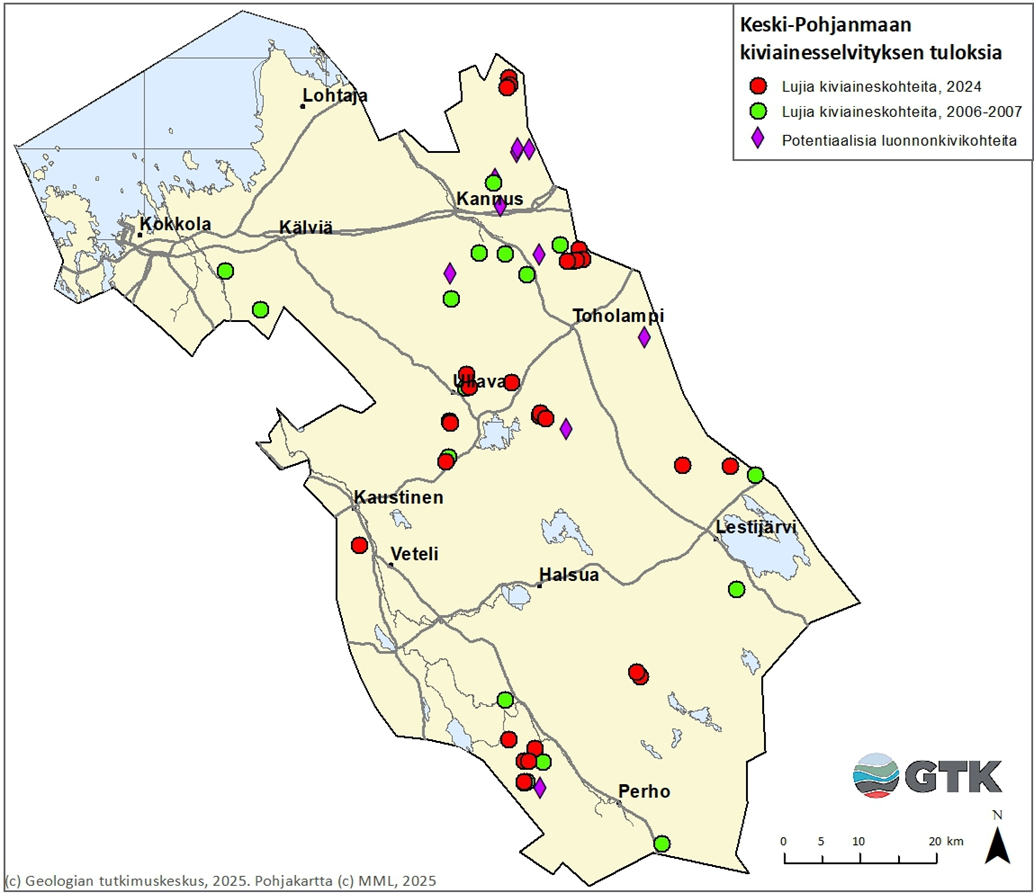
The Central Ostrobothnia rock aggregate study covers the entire region and complements the previous study conducted by GTK in 2006-2007. The aim was to obtain up-to-date and location-specific information on the availability of rock aggregates needed in construction projects in the nearby areas of planned construction sites, such as wind farms.
Local rock aggregate production is particularly important in terms of land use planning and the implementation of circular economy in and around growth centres in Central Ostrobothnia. The study identified several new operation and production sites, especially in the central and southern parts of the region.
Locally extracted aggregate reduces costs and climate emissions
Aggregates are used in almost all construction work. They are used as such or in processed form in building, transport infrastructure and environmental construction as well as raw material for concrete and asphalt. In Finland, the consumption of aggregates is considerable: approximately 25 tonnes per person per year, which corresponds to one full truck per person.
In fact, the transport of aggregates causes significant costs and emissions. The share of transport can account for up to half of the final price in the application. Therefore, the exploitation of local aggregate materials is not only economical but ecological. The use of the correct aggregate in the right location and the recycling of materials are the most important factors in sustainable construction.
Surveys identified several promising rock aggregate sites
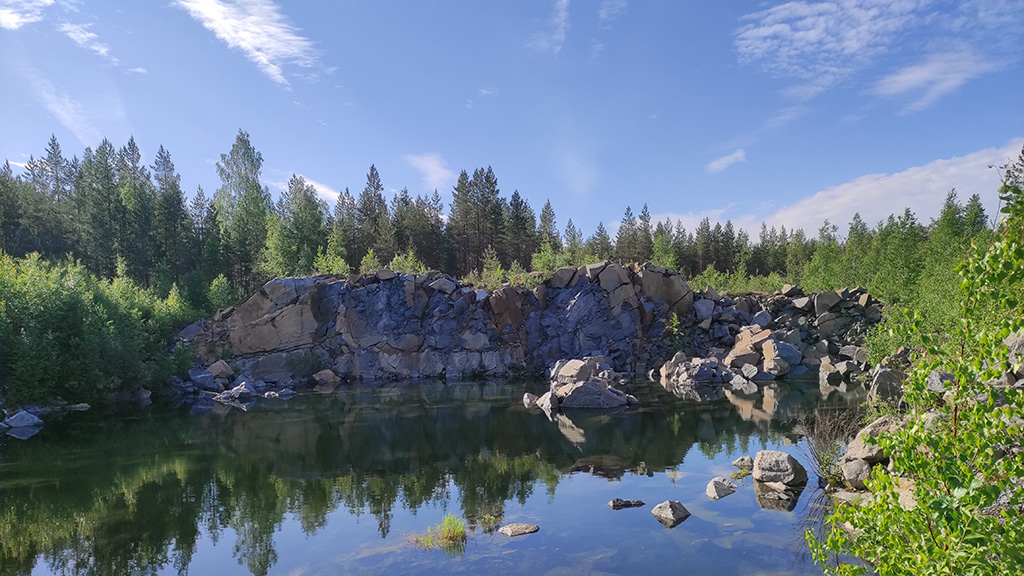
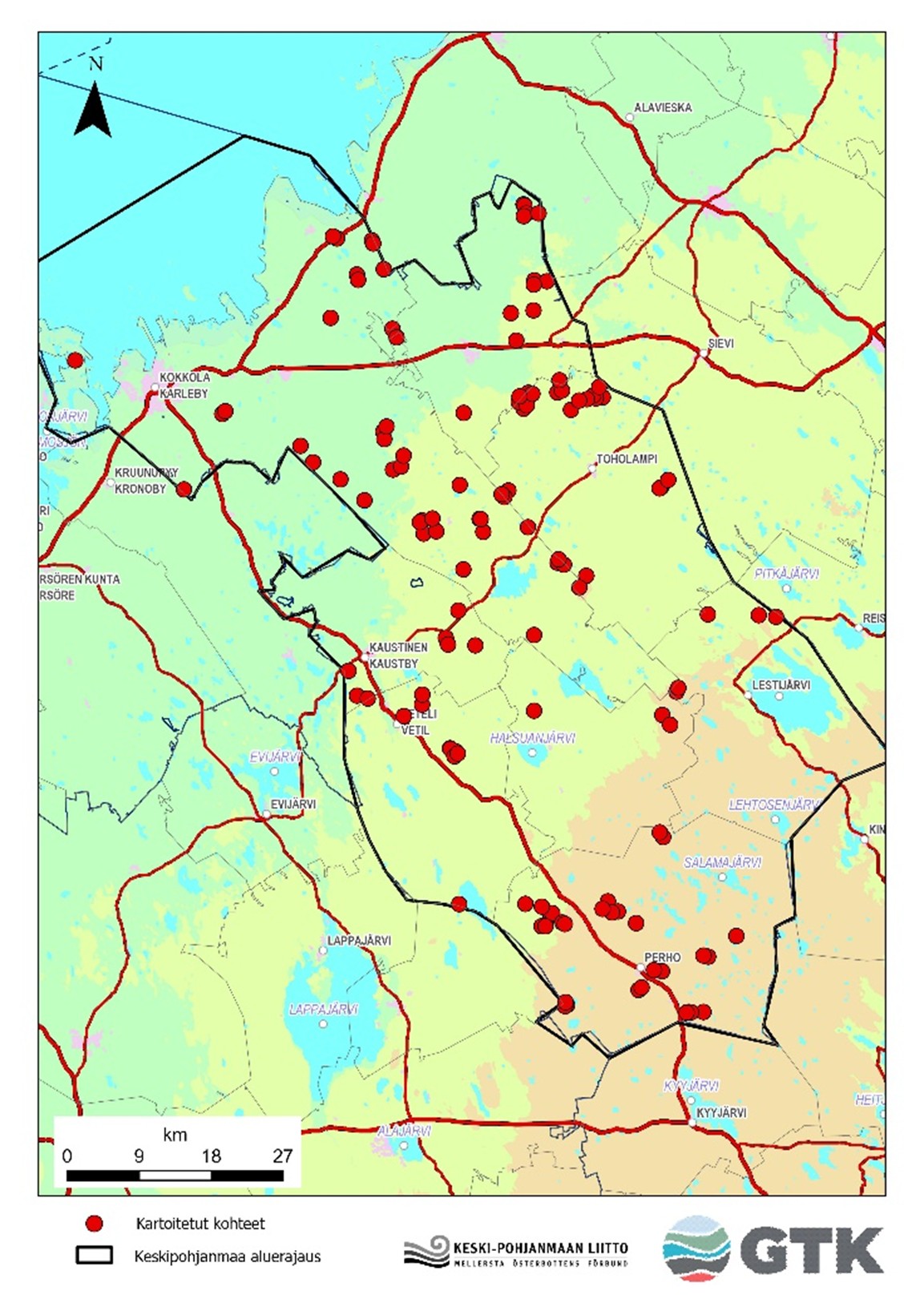
GTK examined a total of 120 bedrock sites in the Central Ostrobothnia region, from which rock types and their geological properties were observed, and the mechanical strength and potential of the rock type as natural stone were evaluated. Test samples were taken from four selected locations and of these samples laboratory tests and petrographic descriptions were carried out. As a result, several new rock aggregate sites with a high mechanical abrasive strength were found, with a particular focus on volcanic rock areas in the central and southern parts of the region.
“A total of 25 sites of rock aggregates with a high mechanical abrasive strength were identified. Some of the observations also aligned with areas planned for wind farms. However, no new hard rock sites were found in this additional survey for the consumption area of Kokkola. Out of natural stone sites, areas with grey porphyritic granite and so-called black stone as well as a schist site call for further examination,” says Project Manager Heidi Laxström from GTK.
The rock aggregate study was carried out in cooperation with the Regional Council of Central Ostrobothnia, and the project received funding from the appropriations for the Development of regional ecosystems (AKKE) programme. The project steering group also included local aggregate producers and representatives of sub-regions.
Further information
Heidi Laxström, Project Manager
Geological Survey of Finland GTK
heidi.laxstrom@gtk.fi
tel. +358 29 503 5271
The rock aggregate study work report can be viewed and downloaded in GTK`s Hakku data service (available in Finnish): Keski-Pohjanmaan kiviainesselvityksen loppuraportti
Introduction to the project on GTK`s website: AKKE – Central Ostrobothnia Rock Aggregate Study
Related GTK service: Rock aggregate studies and circular economy of aggregates
Related GTK service: Sustainable use of dimension stone and natural stone