Home ⟩ GTK ⟩ The Layman’s Sample Practice and General Information on Geology ⟩ The Most Promising Layman’s Samples Are Rewarded ⟩ The minerals most interesting to GTK

The main focus of GTK`s mineral exploration are critical and strategic raw materials listed by the European Union. These raw materials have great economic importance for Europe but also high risk of supply disruption.
The EU has identified some of the critical raw materials also as strategic raw materials which are needed for the green transition, digitalisation, and defence technologies. There is a significant difference between the global supply and demand for strategic raw materials. In addition, increasing their production is often challenging. There are 34 critical raw materials, of which 17 are also listed as strategic. The most commonly occurring critical and strategic raw materials in Finland are presented below.
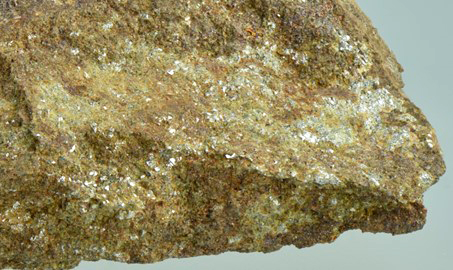
Chalcopyrite is the most important and common copper ore mineral. It resembles pyrite in appearance, but its color is more yellowish and often slightly greenish. Chalcopyrite is also softer than pyrite.
This mineral often occurs together with other sulfide minerals such as pyrite, magnetite, and sphalerite. It contains approximately 35% copper, 30% iron, and 35% sulfur.
Copper is widely used as a conductor of electricity and heat in cables and electrical components, piping, construction materials, and in the auto and mechanical engineering industries.
Additionally, copper is utilised in alloys such as bronze and brass, as well as in various chemical and industrial applications.
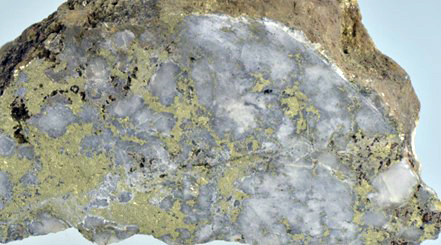
Pentlandite is the most important nickel-bearing mineral and often contains cobalt as well. It is most often found in association with ultramafic rocks. Pentlandite frequently occurs alongside magnetite but distinguishing it from magnetite with the naked eye can be difficult. The mineral has a bronzy yellow-brown color and a metallic luster.
Pentlandite can be distinguished from magnetite using the dimethylglyoxime test.
Nickel is widely used in the production of stainless steels and other metal alloys that require corrosion resistance and high-temperature durability.
In addition, nickel is utilized in rechargeable batteries, electrical components, catalysts in the chemical industry, and for coating certain metal surfaces.
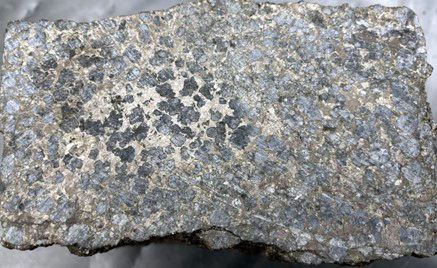
Cobaltite is a metallic-looking mineral with a reddish silver-white color.
Cobaltite is softer and more reddish than pyrite. It is found in nickel-copper-platinum ores, and for example, in the Haveri gold deposit in Viljakkala, it occurs alongside other arsenide minerals.
Cobalt is primarily used in rechargeable batteries, such as those in electric vehicles and mobile devices. It is also utilised in superalloys, which require high strength and resistance to high temperatures, as well as in chemical industry catalysts and the production of certain pigments.
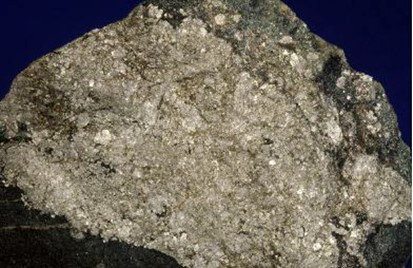
Spodumene is the most important lithium-bearing mineral. It belongs to the pyroxene group and typically appears as flat prisms with longitudinal striations. Its color ranges from grayish-white to yellowish, greenish, or reddish, and it has a vitreous luster.
Spodumene occurs in granite pegmatites, and its crystals can be several centimeters, sometimes even meters long.
In Finland, around 30 spodumene-bearing pegmatite dikes are known across the country, with the most important ones located in the Kruunupyy–Ullava region.
Lithium is primarily used in the production of lithium-ion batteries, but also in the ceramics and glass industries and in the manufacture of lithium salts. Some transparent green and purple varieties are also used as gemstones.
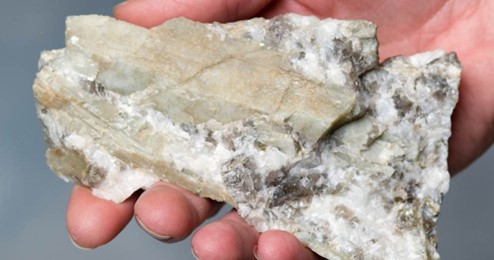
Graphite is a dark gray mineral that commonly appears as flakes, flake aggregates, or massive graphite. Its crystals have a metallic luster, while massive graphite has an earthy texture.
It feels greasy to touch and leaves a dark gray mark, much like a pencil. Graphite is very soft and found in schists, gneisses, and intrusive rocks. Several small deposits are known in Finland, some of which have been extracted.
Graphite is an excellent conductor of electricity. It is used in the steel and foundry industries, in seals for valves that withstand high pressure and temperature, and as electrodes, lubricants, and even as fuel.
For a graphite deposit to be economically viable, the graphite content should exceed 10%, and the flake size should be over 0.1 mm. Fine-grained graphite in black shales is generally not usable.
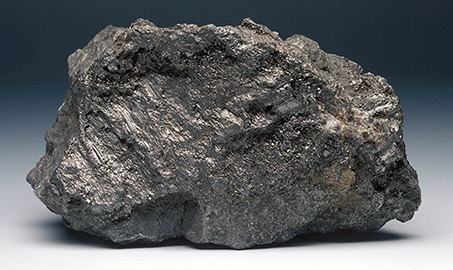
Arsenopyrite is a mineral commonly found in gold ores, often alongside pyrite. It may also occur with other critical raw materials such as cobalt, antimony, and bismuth. The color of arsenopyrite ranges from metallic silver-white to steel gray.
Arsenopyrite crystals often form prismatic shapes, and when struck with a hammer, the mineral emits a garlic-like odor.