
Climate Change Increases Land Use Risks in Black Shale Areas and Calls for Effective Environmental Impacts Management
The Geological Survey of Finland GTK, the University of Oulu and the Natural Resources Institute Finland are developing new methods to identify black shale areas, assess associated risks and manage environmental impacts. Environmental hazards linked to black shales pose challenges, for example in Northern Finland, where this sulphur-rich rock type is widespread. The research supports the land use sector in preventing environmental impacts and adapting to risks related to climate change in black shale areas.
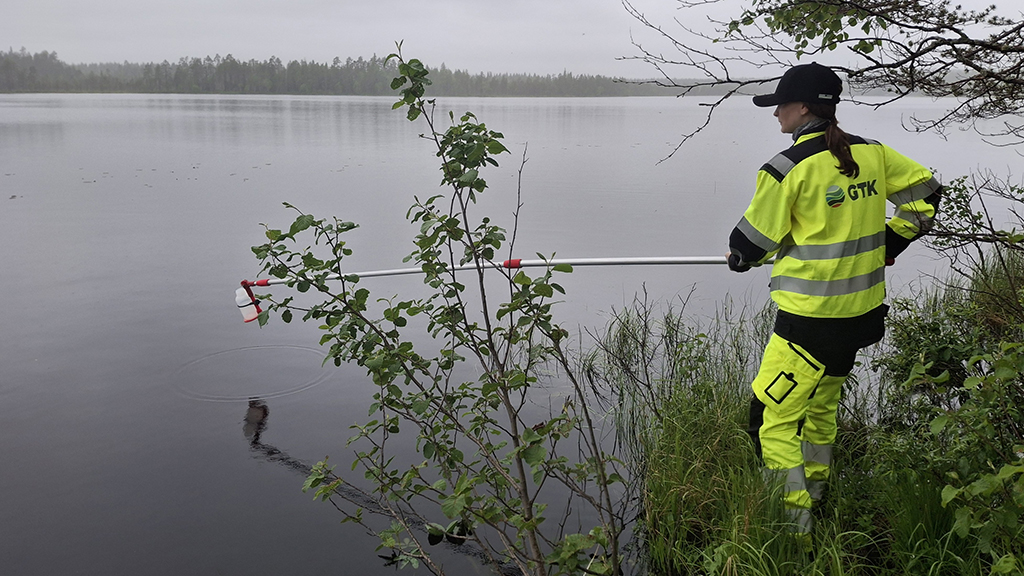
Several rock and soil types that naturally contain sulphur and heavy metals occur in Southern Lapland, Kainuu and the Oulu region. As a result of land use, sulphur-rich soils and rocks may come into contact with oxygen or surface waters, leading to acidification and the dissolution and transport of harmful metals into water bodies.
Climate change is expected to intensify land use-related risks in Northern Finland. Rising temperatures, increased precipitation and more frequent extreme weather events accelerate black shale-derived acidification and the transport of harmful substances. These effects are reflected, for example, in drained peatland forests located in black shale areas and in the planning of their restoration.
“Although we have information on the risks associated with the restoration of forest drainage ditches in black shale areas, we do not yet know how effectively restoring drained forest areas by infilling ditches can prevent acidification. Monitoring the quality of runoff waters from restoration sites will provide valuable information for targeting restoration measures,” says Senior Scientist Tiina Maileena Nieminen from the Natural Resources Institute Finland.
The impacts of climate change in black shale areas have so far been studied only to a limited extent. However, accurate knowledge of the locations and characteristics of these areas is essential for sustainable land use planning and for reducing loading to water bodies. Assessing the adverse effects of black shale soils is needed, e.g. in infrastructure projects, environmental permitting and land use planning.
Towards harmonised practices and comprehensive risk management
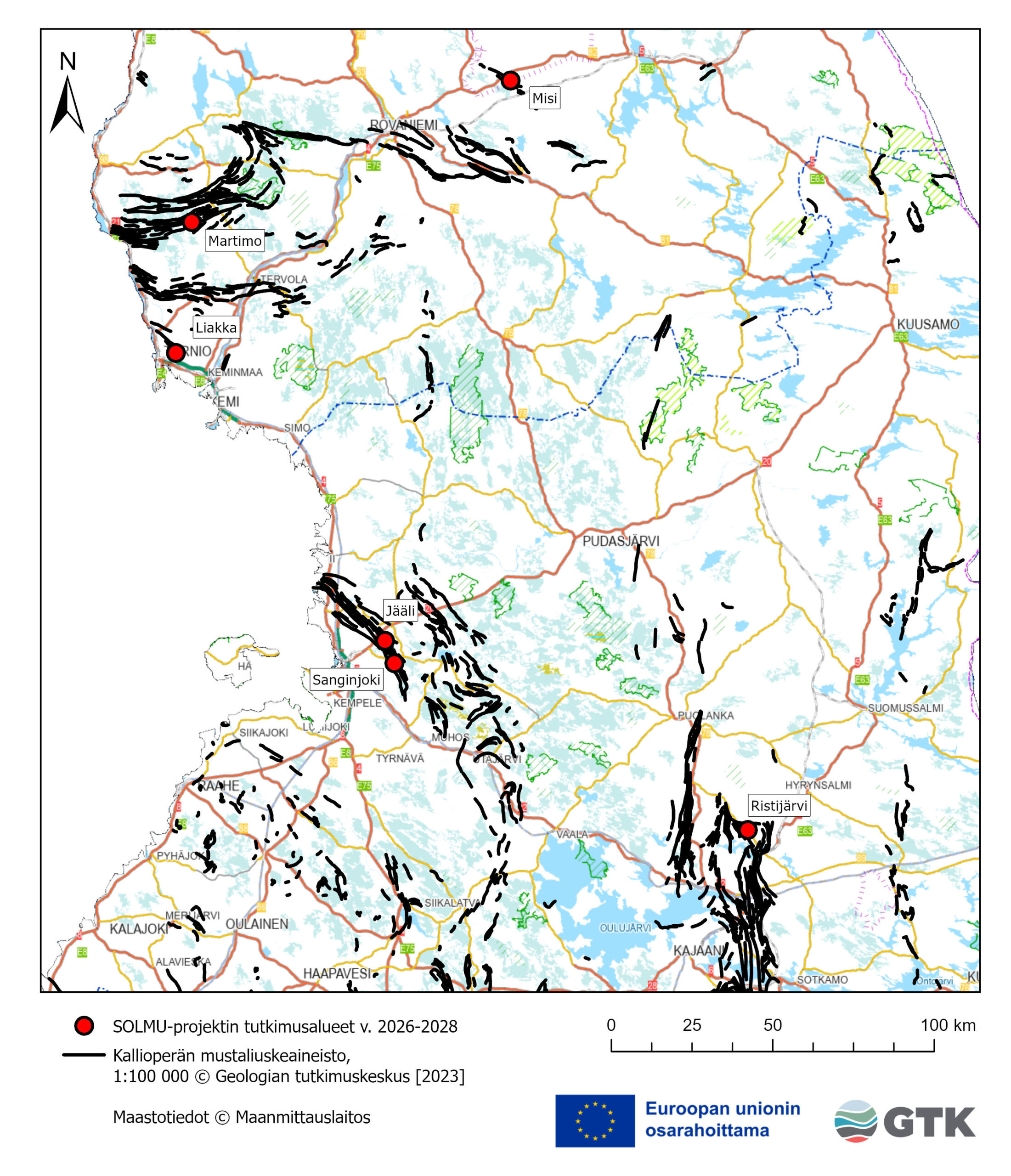
The project Adaptation and land use planning strategies for black shale areas in a changing climate (SOLMU) develops cost-effective methods for identifying and accurately delineating black shale areas in locations planned for land use. The study sites represent different land uses, black shale zones and soil conditions.
At present, there is also limited monitoring data available on the environmental impacts of black shales across different land use sites. In the SOLMU project, geochemical analyses of soils and waters, complemented by sediment analyses, enable long term assessment of impacts in sites without continuous water quality monitoring.
“Currently, there are no harmonised, widely applied guidelines for the site-specific delineation and risk assessment of black shales. We aim to address this need by developing consistent operating models that can be applied across all types of land use. In particular, land use planning should be able to distinguish areas where the risk of environmental degradation is elevated,” says Project Manager Pauliina Liwata-Kenttälä from GTK.
The project will produce comprehensive risk assessment and management model for the environmental impacts of black shales for the land use sector. Although the research focuses on sites in Northern Finland, the results are applicable nationwide, serving sectors such as agriculture, forestry and construction. The model will support decision-making at multiple levels, from regional land use planning to site-specific studies, and help to prevent environmental impacts more effectively.
The three-year SOLMU project, co-funded by the European Union, began in early 2026. GTK is responsible for project implementation, with the University of Oulu and the Natural Resources Institute Finland as project partners. The Economic Development Centre of Northern Finland acts as the funding authority.
Further information
Pauliina Liwata-Kenttälä, Project Manager
Geological Survey of Finland GTK
pauliina.liwata-kenttala@gtk.fi
Tel. +358 29 503 4133
Tiina M. Nieminen, Senior Scientist
Natural Resources Institute Finland
tiina.m.nieminen@luke.fi
Tel. +358 29 532 5457
Pertti Sarala, Professor
University of Oulu, Oulu Mining School (OMS)
Pertti.Sarala@oulu.fi
Project introduction on GTK’s website:
Adaptation and land use planning strategies for black shale areas in a changing climate (SOLMU)
Project on the Natural Resources Institute Finland website:
Adaptation and land use planning strategies for black shale areas in a changing climate (SOLMU)