
Dozens of Suitable Sites Identified for Underground Hydrogen Storage
Geological Survey of Finland GTK has identified sixty-three potential sites in Northern Ostrobothnia that could be suitable for underground hydrogen storage. Of these, eleven were classified as particularly promising. The most favorable locations were assessed to be Isokangas in Pudasjärvi, Hoikkasuo in Ii, and Pennastenräme in Haapajärvi. This study supports Finland’s goal of achieving carbon neutrality by 2035 and provides valuable information for companies and authorities planning hydrogen infrastructure.
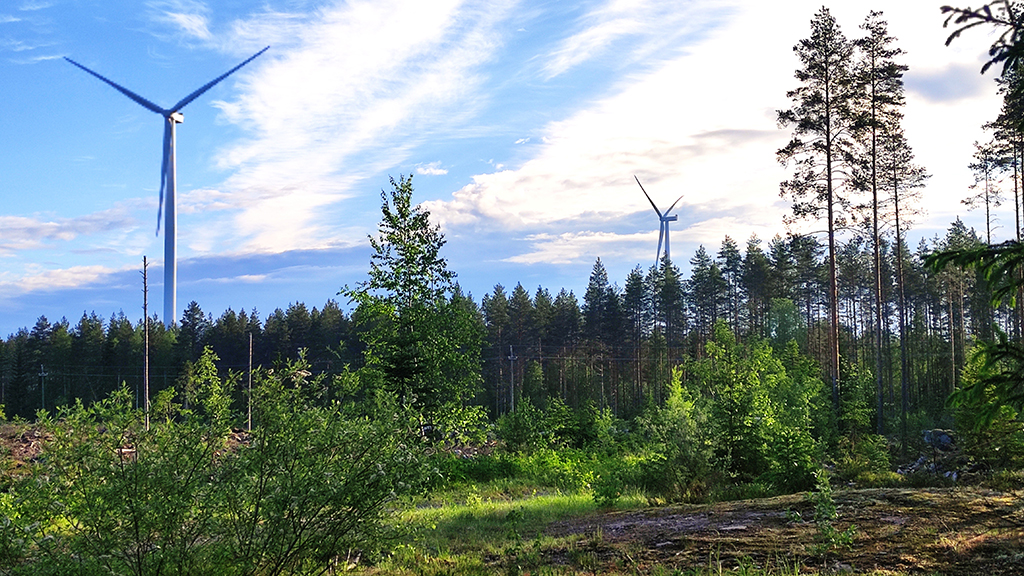
Hydrogen’s role is growing rapidly as part of an energy system based on renewable sources. Due to fluctuations in wind conditions, effective solutions are needed for storing surplus energy. In Northern Ostrobothnia, this need is especially pronounced because the region is a major wind power area. A highly efficient approach is to convert excess energy into hydrogen and store it for later use.
Unlike many other countries, Finland cannot utilize salt formations or depleted oil and gas fields for hydrogen storage. Finland’s crystalline bedrock does not naturally retain hydrogen, which means the only realistic option is a steel-lined cavern excavated in bedrock (Lined Rock Cavern, LRC).
In such a solution, the bedrock provides a secure operating environment for the facility, capable of withstanding higher storage pressures. Other advantages of underground storage include cost-effectiveness and a smaller surface footprint.
GTK assessed the geological suitability of Northern Ostrobothnia for underground hydrogen storage as part of a project funded by the European Regional Development Fund (ERDF) and the Council of Oulu Region.
The project steering group stated that “GTK’s report provides valuable information for companies and authorities planning hydrogen infrastructure in Finland. It supports regional land-use planning and helps ensure that hydrogen storage facilities are located in geologically and socially sustainable areas.” Members of the steering group included Ritva Isomäki from the Council of Oulu Region, Heikki Vihava from OX2 AB Finland, Miika Sinettä from Taaleri Energia Oy, and Markku Tommiska from the Finnish Gas Association.
Suitable sites identified through exclusion and scoring
The study systematically mapped areas where the bedrock is homogeneous, intact, and mechanically stable. At the same time, sites were excluded where underground hydrogen storage would conflict with other land use, environmental protection, or safety requirements.
Factors considered included waterbodies, groundwater areas, nature reserves, settlements, proximity to wind farms, and known bedrock fault zones. Based on these criteria, the remaining areas were scored according to geological, technical, and societal factors. The accuracy of map data was verified through field investigations assessing the suitability of bedrock materials.
The study emphasizes that none of the identified sites are immediately ready for construction; all require site-specific investigations such as drilling and geophysical surveys.
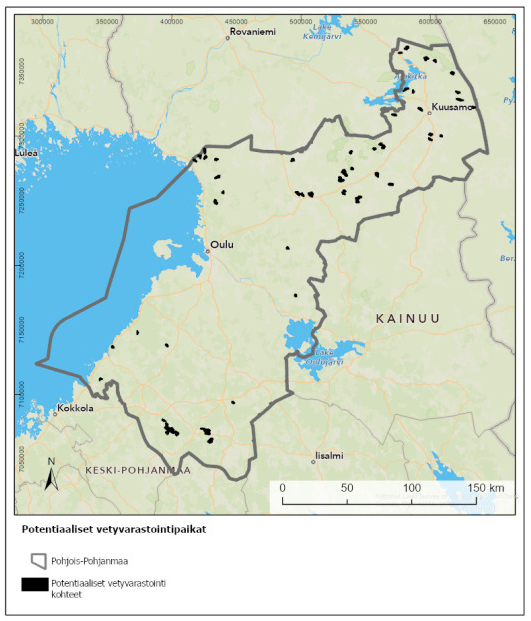
The significance of the study extends beyond individual projects. It provides companies and authorities a shared knowledge base for planning hydrogen-related investments proactively and in a controlled manner. GTK recommends that the identified areas be considered in regional land-use planning to ensure future hydrogen projects can be integrated with other land use.
Underground hydrogen storage is a key component of an energy system increasingly reliant on renewable production. With careful site selection, the bedrock of Northern Ostrobothnia offers excellent conditions for this purpose.
Further information
GTK Open File Work Report in the Hakku download service (in Finnish): Potentiaaliset kohteet maanalaiselle vetyvarastoinnille Pohjois-Pohjanmaalla
Heidi Laxström, Project Manager
Geological Survey of Finland GTK
heidi.laxstrom@gtk.fi
tel. +358 29 503 5271