
Geological Site Investigations Deliver Cost Efficiency and Certainty for Construction and Energy Projects
Understanding geological conditions and bedrock characteristics is fundamental in underground construction, although geological data is also needed for above-ground developments. Site investigations carried out at an early stage provide crucial information on an area’s characteristics and suitability for its intended use. Considering geological conditions alongside other factors affecting construction during site selection helps identify the most suitable location for a project, manage costs, and support both safety and licence to operate.
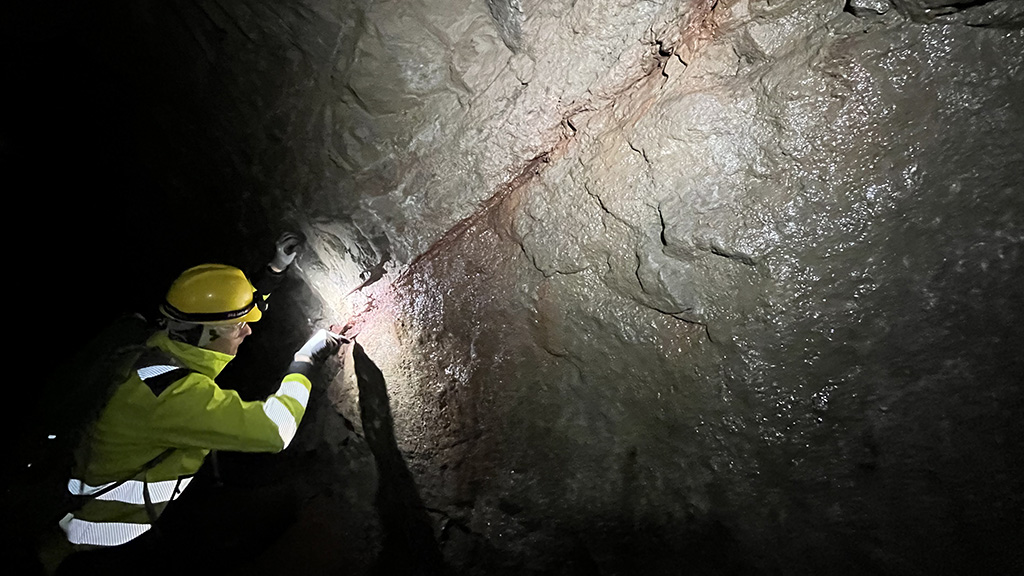
In urban areas, various planning and logistical pressures are driving the development of underground facilities and infrastructure. In addition to facilities related to transport, security and storage, growing energy demand and the transition towards clean energy production are increasing interest in underground solutions. Examples include underground energy storage facilities and plans to locate small modular reactors (SMRs) for heat production in rock caverns.
Underground conditions can vary significantly
In Finland, subsurface conditions can vary considerably even within a relatively small area. The thickness of soil covering the bedrock can vary from less than a metre to several tens of metres. Finland is located on a stable shield area, and its bedrock predominantly consists of very old crystalline rock. However, the bedrock is also characterised by extensive fracturing. Most of this fracturing is concentrated in the upper parts of the bedrock, down to depths of around 150 metres, although fractures also occur at greater depths.
“Modern technologies make it possible to build even in poor-quality rock, but doing so is significantly more expensive and requires extensive support measures. Construction in weak rock is also less safe, and rock quality can affect both the service life of a facility and its maintenance requirements. Geological site investigations help identify the most suitable location for construction,” says Taina Karvonen, Team Manager at the Geological Survey of Finland GTK.
In some cases, a construction site may have been selected based solely on the availability of land plots, without carrying out any geological site investigations. During the construction phase, it may become apparent that the chosen location is not ideal and that implementation requires costly and time-consuming solutions as well as last-minute design changes. In some projects, an alternative site may not even be available. In such situations, even a minor adjustment to the planned location can have a significant impact on both costs and implementation. The larger the project, the more important it is to consider bedrock conditions at an early stage.
“We often focus on how construction projects affect the environment. It’s just as important to consider how the environment affects construction. Geological conditions should be taken into account from the earliest stages of land use planning and zoning, including below ground,” Karvonen says.
From site selection to detailed site investigations
The Geological Survey of Finland has decades of experience in site selection and site investigations. “At GTK, site selection and site investigation methods were originally developed for the geological disposal of nuclear waste. Over time, we recognised that, with some adaptation, the same methods could be applied to other site selection projects. We have continuously refined the process, and today we have a flexible approach to selecting sites for a wide range of facilities and operations,” Karvonen explains.
Ideally, site selection begins at an early stage of a project with the definition of selection criteria. For example, when identifying a location for a rock-excavated thermal energy storage facility or an SMR plant, some criteria define the characteristics a suitable site must have, while others are used to rule out locations that do not meet the project’s requirements.
In addition to geological criteria, site assessments can incorporate a wide range of factors derived from spatial datasets, including protected areas, road networks, power lines, other infrastructure, and their proximity to the site. At GTK, the criteria are defined jointly with the customer and tailored to the specific needs of each project. Sites meeting the criteria are then evaluated and ranked according to their suitability. The most promising locations are subsequently investigated in the field to verify the source data and ensure that all relevant local conditions have been taken into account.
Once a site has been selected, detailed site investigations are carried out to assess its suitability for the planned facility. Depending on the project’s requirements, these may include bedrock drilling as well as geophysical, hydrogeological and geochemical studies. The scope and level of detail of the investigations are tailored to the type and intended use of the facility, as well as any requirements arising from legislation or environmental impact assessment (EIA) procedure.
“The starting point for GTK’s site investigations is always to consider safety, economic viability, acceptability, and the environmental conditions that affect project feasibility,” says Associate Research Professor Heini Reijonen.
A site investigation begins with a review of existing data on the potential site. At this stage, several alternatives may still be under consideration, although a well-executed site selection process may already have narrowed the focus to a single investigation area. Field investigations then include geological mapping, surface geophysical surveys, and the selection of drilling locations. Drilling is used to verify the properties of the rock, while drillholes provide an opportunity for more detailed investigations, including geophysical measurements as well as groundwater and geochemical studies.
Site investigations may also include modelling to characterise bedrock structure, including fractures and deformation zones, or to assess changes in groundwater chemistry where these are relevant to the project. Existing data and samples from previous drilling campaigns are available for many areas in Finland. For example, GTK’s geological sample archive in Loppi contains 3.6 million metres of drill core and millions of other geological samples from across Finland.
GTK’s extensive data resources provide a significant advantage for planning. “We maintain several lineament datasets that provide information on bedrock fracturing as well as the location and characteristics of fracture systems and fault zones. Understanding groundwater behaviour is also extremely important. Groundwater flow in bedrock is controlled by fractures, so information on bedrock properties helps us understand hydrogeological conditions. GTK’s datasets provide a vast amount of valuable information to support planning,” Reijonen explains.
Energy projects are driving demand for site selection studies
Many construction projects currently attracting interest are energy related. Examples include underground storage of heat and hydrogen, offshore wind power, and geothermal energy.
Rock caverns connected to energy plants can store heat when demand is low and release it during periods of peak consumption. Hydrogen is another area attracting significant interest. The key challenge in developing hydrogen economy is ensuring sufficient storage capacity to balance fluctuations in production and maintaining a reliable supply. Underground storage in rock caverns is one approach currently being explored to meet this need.
Bedrock characteristics are a key consideration when selecting sites for both heat and hydrogen storage. In addition to affecting construction costs and safety, site conditions can have a major impact on the operational lifespan of an underground storage facility. Although heat and hydrogen storage have some similar technical requirements, both benefit from rock masses that are as intact as possible. Depending on the design and intended use of the facility, thermal energy storage can be developed directly within a rock cavern. Hydrogen storage, however, requires a particularly tight lining system to protect the surrounding rock from pressure and temperature fluctuations and to prevent hydrogen from migrating into the bedrock fracture network with groundwater flow.
Successful offshore wind development depends on a thorough understanding of seabed conditions. While Finland’s existing offshore wind turbines are located in relatively shallow waters, seabed characteristics become increasingly important as larger turbines are deployed in deeper areas. Detailed knowledge of the engineering properties of seabed sediments is also essential when routing subsea cables and designing inter-array cable networks between turbines.
One of the main advantages of low-emission geothermal energy is its reliable output, regardless of season or weather conditions. Shallow geothermal wells are already widely used to heat detached houses, while medium-deep and deep geothermal wells are attracting growing interest in district heating and cooling systems.
Developing a geothermal well field requires good understanding of the thermal properties of the bedrock and the factors that influence them. Conceptual modelling helps assess heat flow and predict system performance. In these applications, bedrock fracturing can even be beneficial, as groundwater flow can transport heat through the rock. Site selection and geological investigations help assess and verify whether local conditions are suitable for the proposed solution.
Advancing underground hydrogen storage through research
Underground hydrogen storage in rock caverns is still at an early stage of research and development in Finland and internationally. Finland currently has no specific guidelines for the construction of such facilities. To be a cost-effective alternative to above-ground storage tanks, the subsurface hydrogen storage must be sufficiently large.
Designing a rock cavern storage facility requires a thorough understanding of a range of geological factors. During operation, pressure and temperature fluctuations affect both the lining system and the surrounding rock. Hydrogen itself presents specific storage challenges that must be considered in the design. As a result, investigating the geological characteristics of a site is a critical part of the planning process. In recent years, research projects have generated valuable new knowledge to support the development of underground hydrogen storage.
Hydrogen UnderGround (HUG) project explored solutions for the construction and operation of underground hydrogen storage facilities. As a project partner, GTK was responsible for identifying the geological factors relevant to hydrogen storage site selection in Finland.
“In the HUG project, we reviewed the site selection process and piloted the geological investigations associated with it,” says Project Manager Teemu Lindqvist. “We started by identifying three potential locations for underground hydrogen storage through a preliminary study. We then selected the most promising site for more detailed geological investigations. Based on the results, we developed recommendations on the geological factors that should be assessed in areas of this type and the key considerations in selecting a suitable rock mass,” Lindqvist explains.
Preliminary Assessment of Potential Bedrock Sites for Hydrogen Storage project was completed in August 2025. “The aim of the GTK-led project was to identify the bedrock blocks in the Northern Ostrobothnia region that are best suited for the construction of underground hydrogen storage facilities,” says Project Manager Heidi Laxström.
The project also examined aggregates from a circular economy perspective. In the selected areas, GTK carried out a preliminary aggregate resource assessment to explore potential uses for the rock excavated during the construction of underground storage facilities.
Further information
Taina Karvonen, Team Manager
Geological Survey of Finland GTK
Tel. +358 29 503 0089
taina.karvonen@gtk.fi
Heini Reijonen, Associate Research Professor
Geological Survey of Finland GTK
Tel. +358 29 503 2238
heini.reijonen@gtk.fi
GTK’s services that might interest you
- Geological site selection
- Geological disposal site studies
- Storing hydrogen and other energy in bedrock
- Storage of geothermal energy
- Surveys related to properties of aquatic sediments
- Sounding of the sea or lake beds
News article on the project’s results:
Dozens of Suitable Sites Identified for Underground Hydrogen Storage
Introduction to the HUG project on VTT’s website:
HUG – Hydrogen UnderGround