
Study: The Utilisation Potential of Finland’s Closed Extractive Waste Sites Is Limited
The Geological Survey of Finland (GTK) has assessed the potential of Finland’s most significant closed extractive waste sites for the recovery of critical raw materials. According to the study, the potential is largely low and based on current information the waste sites cannot be considered economically viable primary sources of critical raw materials. At the same time, GTK has for the first time made extractive waste sites widely available to the public through a map service.
Mining waste is Finland’s largest waste category and consists mainly of waste rock and tailings. The EU Critical Raw Materials Act (CRMA) obliges Member States to assess the utilisation potential of such materials and to compile their data into a national database.
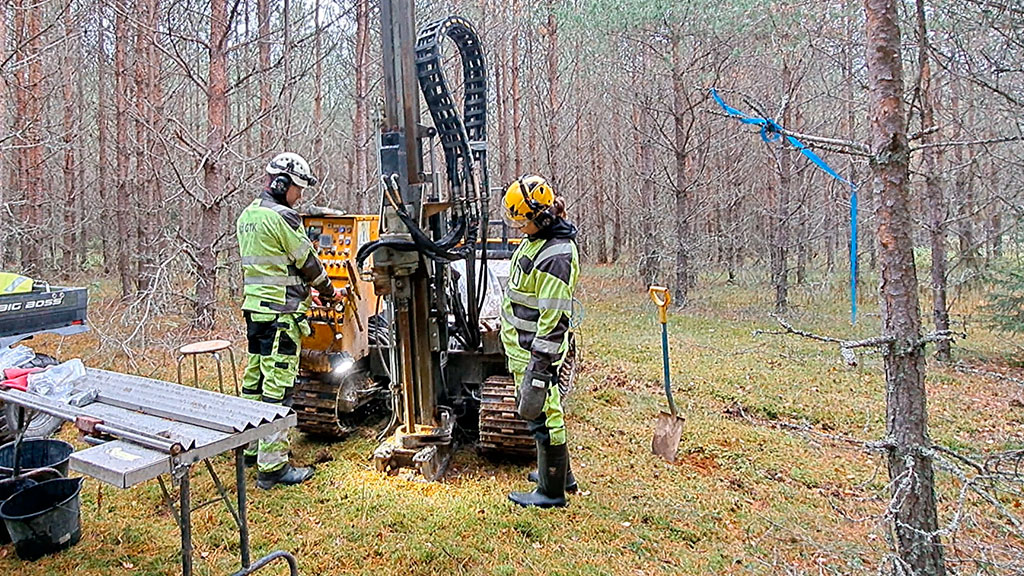
GTK’s study examined eight of Finland’s most significant tailings facilities and two waste rock facilities and carried out beneficiation tests at selected sites. The results show that the concentrations of critical raw materials are generally so low that utilisation as stand-alone metal sources is not economically feasible. New technologies and solutions based on side streams may open up opportunities in the future, but these would require further research.
“The results now obtained show that the beneficiation methods used in Finland have been sufficiently efficient that valuable elements have not ended up in mining waste in quantities that would make their recovery worthwhile. At the waste facility with the greatest potential in terms of results, the total mass of material is so small that utilisation is unlikely to be economically viable. It’s largely the geology of the deposit that determines the potential occurrence of critical raw materials, while the beneficiation process used in mining in turn determines the potential viability of mining waste”, says Anna Tornivaara, Team Manager, GTK.
Environmental benefits may be achieved
Although the economic potential is limited, the utilisation of extractive waste may generate environmental benefits. GTK also examined tailings facilities from this perspective. For example, at the Orijärvi and Hammaslahti sites, reprocessing of the waste could improve the management of mining waste facilities and reduce environmental impacts.
At Orijärvi, the concentrations in tailings generated during the early stages of mining are moderately high, and reprocessing using conventional methods proved to be technically feasible. By contrast, hydrometallurgical methods and membrane separation-based techniques have not yet produced sufficiently good results.
The study was carried out as part of the NextGenerationEU-funded project REPower-CEST (Clean Energy System Transition).
Mining waste Integrated into Public Information via GTK’s Map Service
In accordance with the Critical Raw Materials Act, GTK has published information on mining waste facilities, their characteristics and locations in a public map service. They are now part of GTK’s mineral deposit database.
The update improves data accessibility and supports the assessment of the circular economy, environmental impacts and raw material security of supply. In the map service, each site includes a direct link to more detailed information via the RAKKA user interface.
The renewal of the user interface, data collection and the development of data dissemination have been carried out as part of the NextGenerationEU-funded project REPower-CEST (Clean Energy System Transition), the Horizon Europe-funded project FutuRaM (Future Availability of Secondary Raw Materials), and GTK’s internally funded project JaloNGFF.
Further Information
Read the full report in Finnish: Assessment of the Utilisation Potential of Critical Raw Materials at Closed Mining Waste Facilities in Finland
GTK Published Best Practices for Assessing the Raw Material Potential of Extractive Waste
GTK’s Mineral Deposit Database Renewed – Extractive Waste Now on a Map
Anna Tornivaara
Team Manager
Geological Survey of Finland (GTK)
Tel. +358 29 503 3984
anna.tornivaara@gtk.fi